
ISRO has successfully launched EOS-05, India's first geo-imaging satellite, into a precise sub-geosynchronous transfer orbit using a GSLV rocket. This 2,367 kg satellite, the heaviest ever carried by a GSLV, will provide real-time imagery for applications in agriculture and disaster management from an altitude of 36,000 km.
The Polar Satellite Launch Vehicle (PSLV) in its 63rd mission, would carry the earth observation satellite (EOS-09) which would be capable of capturing high-resolution images of the Earth's surface under all weather conditions.
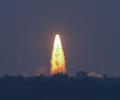
A PSLV rocket carrying Earth observation satellite EOS-09 failed to launch from the Sriharikota spaceport early on Sunday.

The mission objective is to ensure data continuity of ocean color and wind vector data to sustain the operational applications.

The private consortium would invest more than Rs 1,200 crore over the next five years to launch a constellation of 12 state-of-the-art Earth Observation satellites equipped with panchromatic, multispectral, hyperspectral, and microwave SAR (synthetic aperture radar) sensors.

EOS-01 is an earth observation satellite intended for applications in agriculture, forestry and disaster management support, ISRO has said.

This is the first mission by the Indian Speace Research Organisation this year.

Indian Space Research Organisation's second mission of the year to place an earth observation satellite by a GSLV rocket faced a setback as the mission could not be accomplished fully due to performance anomaly in the cryogenic stage of the rocket, the space agency said on Thursday.

The earth observation satellite would provide real-time images of the country and also be able to quickly monitor natural disasters.

The polar satellite launch vehicle-C42 launch vehicle carrying the two satellites blasted off from the first launchpad at the Satish Dhawan Space Centre at 10.08 pm.

It is about proving that the agency can still deliver when the stakes are high.
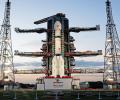
The imaging technology in Nisar can provide very high-resolution data on changes as small as one centimetre in size on the earth's surface.

Weighing 190 kg, Mission Drishti is India's heaviest privately developed Earth observation satellite.

'With this deal, we may see even 50 launches a year within the next few years.'

US Ambassador to India, Sergio Gor, highlighted the evolving US-India space partnership, moving from cooperation to "co-creation" at the Bengaluru Space Expo. He emphasised joint design, funding, and co-authoring the future of human discovery, citing the NISAR satellite and India's participation in the Artemis Accords as key examples of this growing synergy.

'Today, as I look at our satellite -- tested, finished and ready to ship -- represents 1,642 days of grit and belief.'

'From day one, our vision has been to build a company that develops and owns the technologies defining the future of space.'

'It is to observe the Sun continuously that you have the Aditya L1 mission.' 'It is in a position from where it can observe the Sun continuously.'

'ISRO will not manufacture any launch vehicles. That will all be done by the private sector or public sector undertakings.'

Concerns are rising about the status of GalaxEye Space's Mission Drishti, India's first Made in India OptoSAR satellite, launched on May 3. Reports suggest the satellite is tumbling in space, and experts highlight potential issues with solar panel deployment and stabilisation. The company has remained silent on the matter, fueling further speculation.

Nibe Space (NSPL), a subsidiary of Nibe, announced its vision to establish India's first multi-sensor, all-weather, high-revisit Earth observation satellite constellation. Aiming to strengthen India's self-reliance in the strategically crucial defence-space sector, NSPL signed memoranda of agreement with Indian and global partners, including Larsen & Toubro, Centum, AgniKul, Skyroot Aerospace, SpaceFields, SISIR Radar, CYRAN AI Solutions, and Thales Alenia Space as a technology partner.

This might lead to a further outburst, flooding downstream if left unchecked.

Buying a mature rocket technology gives companies the designs and hardware know-how, but not necessarily the decades of engineering wisdom needed to make it work.

ISRO's PSLV-C62 successfully launched an earth observation satellite along with 14 other commercial payloads from Sriharikota, marking the first launch of the year.

'An instruction came from somebody in Delhi saying, "don't go with the launch".'

India and the US on Wednesday marked their maiden space collaboration with the successful flight of a GSLV rocket that placed an earth observation satellite, jointly developed by the two space agencies, in a precise orbit.

These upcoming launches carry added significance in light of setbacks suffered in recent years.

Based on the broadcast visuals, a rocket expert said the failure appeared similar to the anomaly seen during the PSLV-C61 mission.
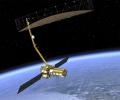
NISAR will not be used for surveillance and will be used to observe the earth.

BIT Mesra has launched 'HimClimX', an AI-powered platform designed for Himalayan climate intelligence and visualisation. It integrates over a century of climate data to offer trend analysis, anomaly detection, spatial visualisation, impact assessment, and AI-driven forecasting for the Himalayan region.
Pixxel has raised $95 million in funding and with the company's commercial Firefly satellites up in orbit selling data globally 'we know and seen what it takes to make this business work.'
Birla Institute of Technology (BIT) Mesra has signed a Memorandum of Understanding with the North Eastern Space Applications Centre (NESAC) to formalise cooperation in geospatial technologies.

'The Indian private space sector is no longer a high-risk bet; it is a highly bankable, globally competitive asset class capable of easing the global small satellite launch bottleneck.'

The subtext here is that nobody else really matters to America today; only China, because nobody else can truly hurt them, points out Mihir S Sharma.

The primary goal of HysIS, whose mission life is five years, is to study the earth's surface in visible near infrared and shortwave infrared regions of the electromagnetic spectrum.

The move follows a quiet visit by National Security Advisor Ajit Kumar Doval to the Vikram Sarabhai Space Centre in Thiruvananthapuram.

The US Air Force on Wednesday handed over NISAR, an earth observation satellite jointly developed by NASA and ISRO, to the Indian space agency.
A high-level committee investigating the failures of ISRO's PSLV rockets, which have impacted strategic satellite missions, has yet to release its report and recommendations, raising concerns about the future of the ageing launch vehicle.

Russian cosmonauts aboard the International Space Station have conveyed special greetings to the people of India as the nation prepares to mark its 80th Independence Day, holding the Indian tricolour and underscoring the enduring partnership between the two countries in space exploration.

Scientists discover tiny whirlpool-like swirls on the Sun that could explain solar activity, improve space weather research and solve a decades-old solar mystery.
